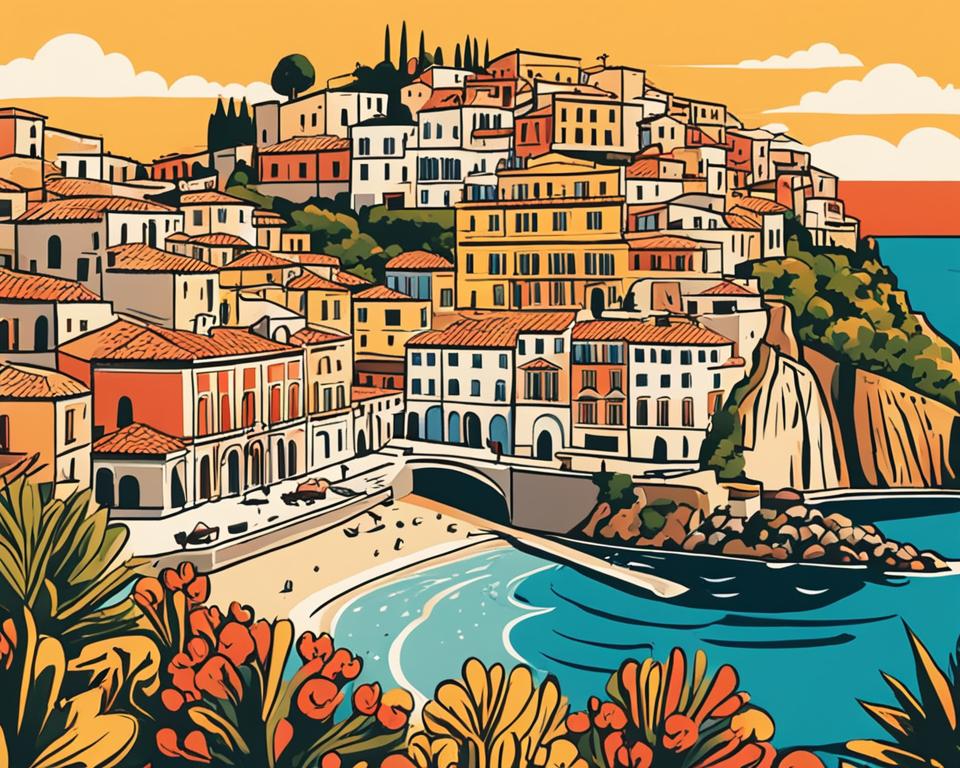
Sicily, known for its beauty and storied past, has been the backdrop for many incredible films. Here is a list of must-watch movies set in Sicily that showcase the diverse culture and allure of the island. From classics like “Cinema Paradiso” to more recent films like “A Street in Palermo,” these cinematic gems capture the essence of Sicily and will transport you to this captivating destination.
Key Takeaways:
- Explore the rich culture and beauty of Sicily through these must-watch films.
- Experience the nostalgia of Sicilian village life in “Cinema Paradiso.”
- Discover the connection between Sicily and the Sicilian-American mafia in “The Godfather” trilogy.
- Immerse yourself in the volcanic landscape of Stromboli in Roberto Rossellini’s film.
- Get ready to be enchanted as you embark on a cinematic journey through Sicily.
Table of Contents
“Cinema Paradiso” (1988)
“Cinema Paradiso” is a beloved Italian film directed by Giuseppe Tornatore. Set in the small village of Giancarlo in Sicily, the film follows the life of Salvatore Di Vita, a young boy who spends his free time in a local cinema called “Cinema Paradiso.” Through this heartwarming coming-of-age story, the film beautifully captures the magic of cinema and the nostalgic charm of Sicilian village life.
Salvatore, affectionately known as Toto, forms a special bond with the projectionist, Alfredo, who becomes a mentor figure in his life. As Toto grows older, his passion for movies and his deep connection to his hometown shape his journey as he navigates love, loss, and the pursuit of his dreams. The film masterfully intertwines Toto’s personal growth with the evolution of cinema itself, creating a poignant narrative that resonates with audiences worldwide.
Cinema Paradiso showcases the power of storytelling and its ability to transport us to different places and time periods. It celebrates the role of cinema as a unifying force that brings communities together and evokes shared emotions. The film’s portrayal of Sicilian village life is both endearing and nostalgic, immersing viewers in the beauty and simplicity of a bygone era.
Giuseppe Tornatore’s direction, along with Ennio Morricone’s evocative musical score, further elevates the film’s emotionally charged atmosphere, leaving a lasting impact on viewers long after the credits roll. Cinema Paradiso has rightfully earned its place as one of the most cherished films in Italian cinema and a true Sicilian cinema classic.
Through its compelling storytelling and heartfelt performances, Cinema Paradiso transports audiences to the enchanting world of Sicilian cinema. The film’s exploration of love, friendship, and the power of dreams resonates with viewers of all backgrounds, reaffirming the universal language of cinema. It serves as a testament to the rich cultural heritage of Sicily and the enduring magic of the silver screen.
“The Godfather” Trilogy (1972, 1974, 1990)
The “Godfather” trilogy is a renowned series of films directed by Francis Ford Coppola. While primarily set in New York, these iconic movies also feature significant scenes in Sicily. The Corleone family, headed by Don Vito Corleone, traces its roots back to the town of Corleone in Sicily. These epic films offer a glimpse into Sicily’s connections to the Sicilian-American mafia and its role in the family’s story.
To fully appreciate the cultural and historical context of “The Godfather” trilogy, it is important to understand the influence of Sicily on the narrative. The Sicilian-American mafia, also known as the Cosa Nostra, has long been associated with organized crime in the United States. Sicily’s rugged landscapes, ancient ruins, and strong sense of familial bonds provide a striking backdrop for the complex and multi-layered storyline.
In the first installment of the trilogy, released in 1972, viewers are introduced to the power dynamics and internal struggles within the Corleone family in New York. However, it is in the second film that the ties to Sicily become more pronounced. The story delves into the origins of the Corleone family and the pivotal role Sicily played in shaping their rise to power.
Set in the late 19th and early 20th centuries, the second film features flashbacks to a young Vito Corleone’s life in Sicily. These sequences showcase the rustic beauty of Sicilian villages and the internal conflicts faced by a young immigrant trying to establish his place in the New World. The scenes evoke a sense of nostalgia and provide historical context, showing the enduring influence of Sicilian culture on the Corleone family.
The final installment of the trilogy, released in 1990, explores the consequences of the Corleone family’s actions and their impact on future generations. While the focus remains primarily on New York, Sicily continues to be a pivotal location in the narrative. The film highlights the tension between tradition and modernity, as the younger generation of Sicilian-Americans grapple with their heritage and the changing dynamics of organized crime.
Overall, “The Godfather” trilogy stands as a testament to the enduring appeal of Sicilian-American mafia films. Its portrayal of Sicily’s rich cultural heritage and its complex relationship with organized crime has left an indelible mark on cinema history. Through its gripping storytelling, stunning visuals, and memorable performances, the trilogy offers a captivating exploration of power, loyalty, and the price of ambition.
Significant Scenes in Sicily:
| Film | Description |
|---|---|
| The Godfather | The Corleone family’s visit to Sicily after Michael’s exile. |
| The Godfather Part II | Young Vito Corleone’s flashbacks to his early life in Sicily. |
| The Godfather Part III | Michael Corleone’s return to Sicily and his final business negotiations. |
“Stromboli” (1949)
“Stromboli,” directed by Roberto Rossellini, takes place on the remote island of Stromboli in the Aeolian Islands. The film follows the story of a woman named Karin, played by Ingrid Bergman, who marries an Italian fisherman and moves to the island. The volcanic landscape of Stromboli serves as a metaphor for Karin’s internal struggles, making the island itself a prominent character in the film.
In “Stromboli,” the breathtaking and desolate beauty of the Aeolian Islands, particularly Stromboli, adds a unique atmosphere to the narrative. Roberto Rossellini artfully captures the volcanic nature of Stromboli, emphasizing the power and unpredictability of both the natural environment and Karin’s emotional journey.
Roberto Rossellini, an acclaimed Italian director known for his neorealistic style, expertly combines the physicality of the Aeolian Islands with the emotional depth of the characters. Through stunning visuals and Ingrid Bergman’s captivating performance, “Stromboli” showcases the clash between nature and humanity and explores themes of isolation, identity, and the search for meaning.
The portrayal of Stromboli in the film resonates with viewers, drawing them into the isolated world Karin finds herself in. The volcanic landscape serves as a metaphorical representation of Karin’s internal conflicts and the struggles she faces in reconciling her desires with the harsh realities of life on the island.
The film’s depiction of Stromboli and the Aeolian Islands provides a distinct sense of place and atmosphere, captivating audiences with its raw beauty and remote location. The combination of Rossellini’s direction, Bergman’s performance, and the stunning setting of Stromboli makes the film a remarkable exploration of human nature in contrast to the forces of nature.
“Stromboli” remains a significant contribution to Italian cinema and a testament to the creative vision of Roberto Rossellini. Through the unique lens of this film, viewers are transported to the enchanting and volatile world of Stromboli, where the island’s presence shapes the characters’ lives and the overall narrative in profound ways.
Conclusion
Sicily, with its captivating beauty and rich history, has served as a breathtaking backdrop for a plethora of films. From the timeless classic “Cinema Paradiso” to the epic saga of “The Godfather” trilogy, these movies perfectly encapsulate the essence of Sicily, its vibrant culture, and its compelling stories.
Whether you are a newcomer to Sicilian cinema or a seasoned film enthusiast, this curated list of must-watch movies set in Sicily will transport you to this enchanting island. Immerse yourself in the magic of Sicilian cinema classics and explore the extraordinary landscapes and heartfelt narratives that have made these films timeless treasures.
Indulge in the charm of Italian movies set in Sicily and embark on a cinematic journey that showcases the distinct character of this Mediterranean jewel. From the must-see locations to the impeccable cinematography, these movies will leave you captivated and yearning for more.
So grab your favorite movie snacks, sit back, and let these Sicilian cinematic masterpieces transport you to a world where beauty, history, and culture intertwine to create an unforgettable storytelling experience. Experience the magic of Sicily through the lens of these top Sicilian movies and discover why they rightfully deserve a spot on your must-watch list.